The Trauma-Informed Practice Series
The Trauma-Informed Practice E-Course
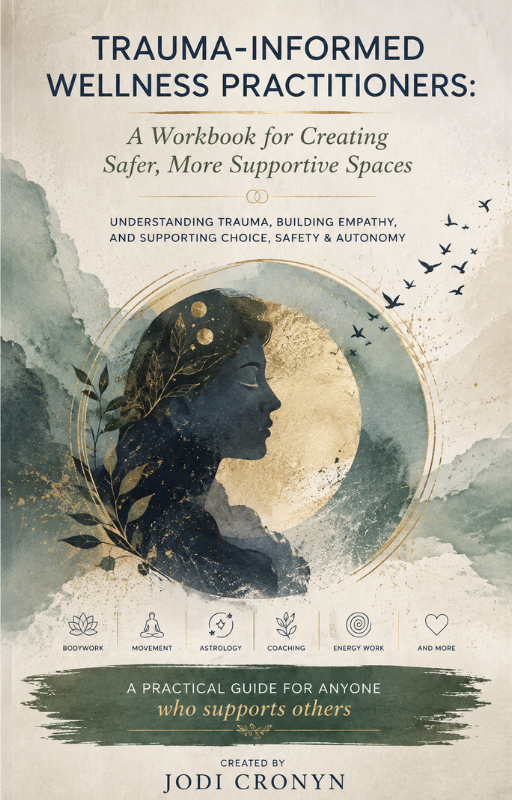
A practical introduction to creating safer, more supportive, and more empowering spaces for the people you work with.
Trauma touches many areas of our lives, and as wellness practitioners, we often work with people who are carrying experiences we may know nothing about. We don't need to know someone's entire history—or become their therapist—to create a practice that is more aware, compassionate, respectful, and supportive.
This workbook explores the foundations of trauma-informed practice for wellness practitioners of many backgrounds, including massage therapists, movement facilitators, coaches, astrologers, energy workers, meditation teachers, yoga instructors, and other practitioners who support people through personal growth and healing.
Inside, you'll explore what trauma is and how trauma and stress can affect the body, nervous system, emotions, behaviour, and our experience of safety. You'll also learn how empathy, communication, consent, choice, boundaries, touch, movement, and embodiment can influence the experiences people have within our practices.
Rather than teaching you to diagnose or treat trauma, this course focuses on how we show up: how we listen, how we communicate, how we respect autonomy, how we recognize the limits of our role, and how we respond when difficult or unexpected moments arise.
Inside the workbook:
Understanding trauma and trauma-related responses
Exploring how trauma and stress affect the body
Empathy, awareness, and professional boundaries
Trauma-informed verbal and non-verbal communication
Validation, reflection, and empowerment
Consent, choice, and autonomy
Touch, movement, and embodiment
Navigating difficult emotional moments and disclosures
Understanding scope of practice and when to refer
Practitioner boundaries and self-care
Practical ways to create a more trauma-informed practice
This is not about becoming the person who can heal everyone who walks through your door.
It is about learning how to create spaces where people can be treated with dignity, curiosity, respect, choice, and autonomy—regardless of what they may have experienced.
Because we don't have to know someone's story to treat them with dignity.
This e-course is available for purchase in our Shop.
The Trauma-Informed Practice: Anatomy of Trauma
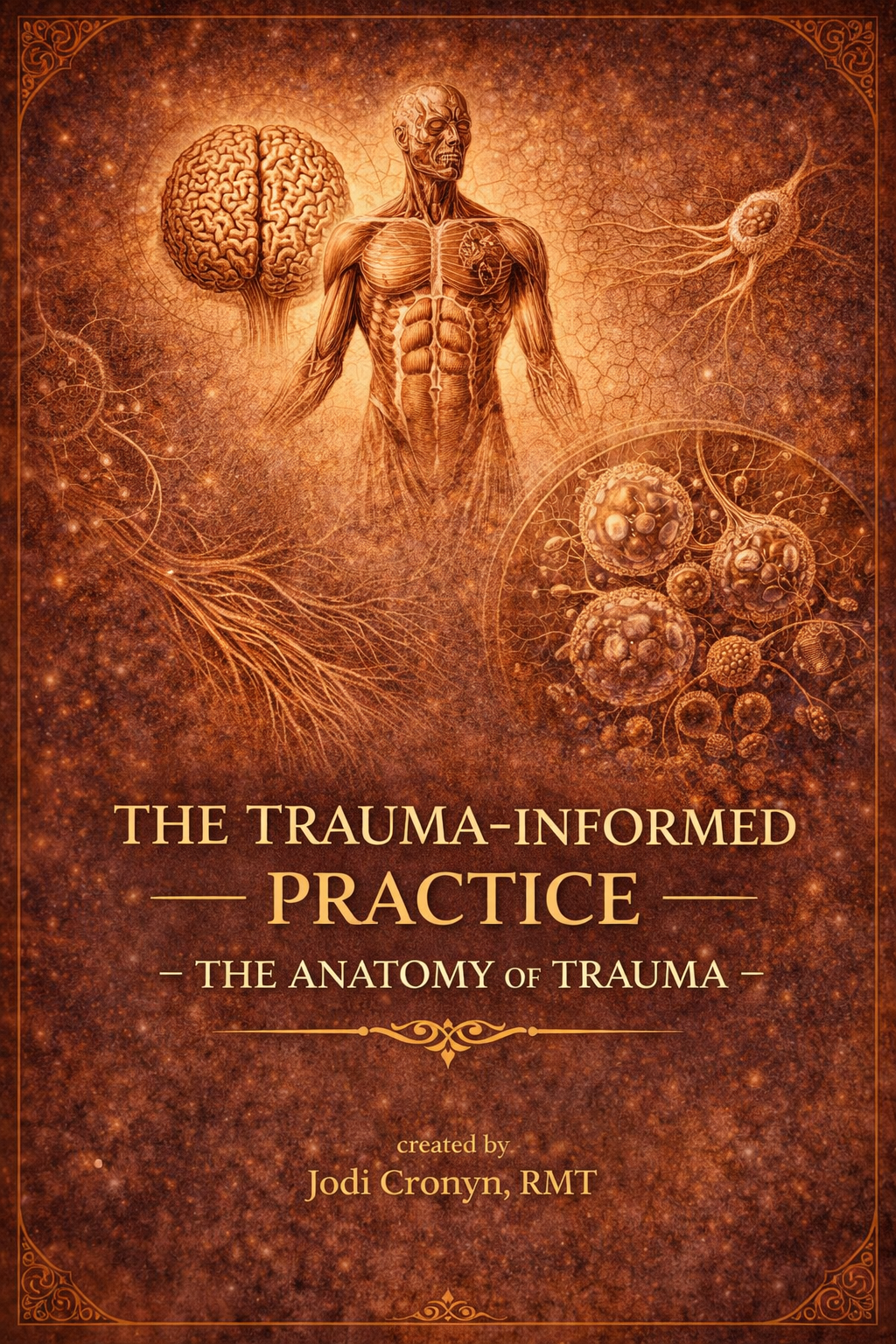
Coming Soon!
Join The Anatomy of Trauma, an in-depth course designed for healthcare and wellness practitioners. This is Part Two of The Trauma-Informed Practice Series, where we return to the anatomy classroom to explore the intricate relationship between the human body and the lasting effects of trauma.
Trauma doesn’t live only in the mind—it takes residence in the tissues, the fascia, and the nervous system, subtly shaping how a person moves, breathes, and relates to the world. For massage therapists, bodyworkers, and movement practitioners, understanding trauma’s physiological imprint opens a deeper dimension of healing. By recognizing and working skillfully with the body’s protective patterns, we help clients safely access stored tension, restore a sense of safety, and reestablish connection to their own physical presence. Trauma-informed bodywork isn’t about reliving the past—it’s about helping the body remember what ease, coherence, and regulation feel like. This approach elevates your practice from symptom relief to true somatic restoration, where touch and movement become pathways to integration and resilience.
Growing evidence from anatomy, cell biology and trauma research shows that traumatic stress is not only encoded in neural circuits but also expressed in the body’s connective tissues and cells. Fascia is now recognized as an active, innervated network that interacts with the nervous system and can reflect long-term postural and protective patterns. Parallel lines of work in trauma and epigenetics show that severe stress can leave durable biological signatures (including altered stress-response regulation and epigenetic marks), which helps explain why symptoms can persist in the body long after an event. Taken together, these findings support a trauma-informed, somatic approach: by working with tissue, movement and nervous-system regulation, practitioners can target the bodily substrates where traumatic patterns are held and help clients reestablish safety and functional movement.
In this course, you’ll:
Review new research on soft tissue cell structure and how our cells hold memory.
Delve into fascial anatomy and its connection to trauma and body memory.
Examine holding patterns related to different types of trauma, injuries, and repetitive strain.
Learn bodywork and massage techniques that support release and integration.
Explore movement and remedial exercise methods that promote physical healing.
Understand how to stay within your professional scope of practice.
Recognize when to refer clients to other practitioners.
Revisit key concepts from Part One of The Trauma-Informed Practice Series.
This course provides a blend of theory, hands-on exploration, and evidence-based research to deepen your understanding of trauma’s imprint on the body and how to support healing in your clients.
This is a fully certified course, and is a great enhancement to any healthcare and wellness practice.
If you would like an in-person immersive learning experience of either of these course, the course series creator - Jodi Cronyn, RMT - is available. Please Reach Out to discuss scheduling and payment.