 Image 1 of 2
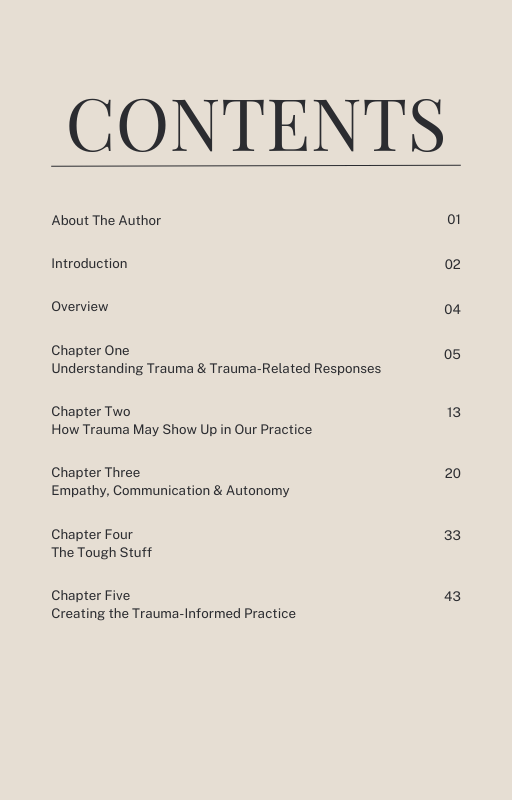 Image 2 of 2
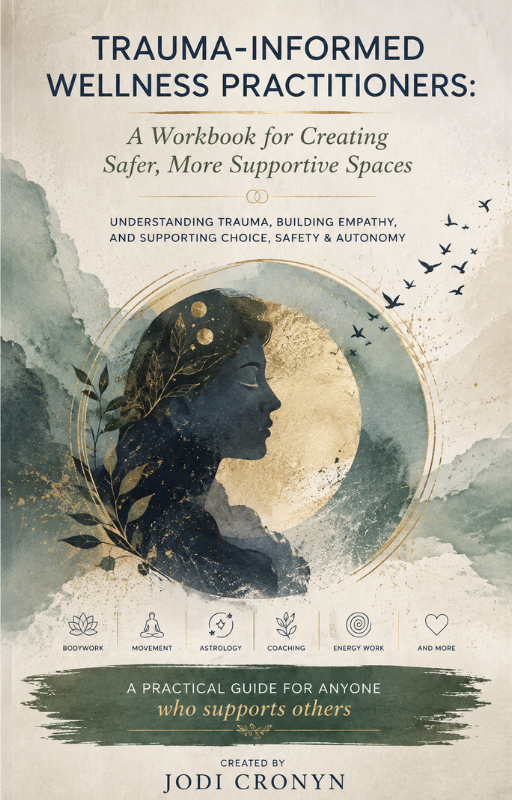
A practical introduction to creating safer, more supportive, and more empowering spaces for the people you work with.
Trauma touches many areas of our lives, and as wellness practitioners, we often work with people who are carrying experiences we may know nothing about. We don't need to know someone's entire history—or become their therapist—to create a practice that is more aware, compassionate, respectful, and supportive.
This workbook explores the foundations of trauma-informed practice for wellness practitioners of many backgrounds, including massage therapists, movement facilitators, coaches, astrologers, energy workers, meditation teachers, yoga instructors, and other practitioners who support people through personal growth and healing.
Inside, you'll explore what trauma is and how trauma and stress can affect the body, nervous system, emotions, behaviour, and our experience of safety. You'll also learn how empathy, communication, consent, choice, boundaries, touch, movement, and embodiment can influence the experiences people have within our practices.
Rather than teaching you to diagnose or treat trauma, this course focuses on how we show up: how we listen, how we communicate, how we respect autonomy, how we recognize the limits of our role, and how we respond when difficult or unexpected moments arise.
Understanding trauma and trauma-related responses
Exploring how trauma and stress affect the body
Empathy, awareness, and professional boundaries
Trauma-informed verbal and non-verbal communication
Validation, reflection, and empowerment
Consent, choice, and autonomy
Touch, movement, and embodiment
Navigating difficult emotional moments and disclosures
Understanding scope of practice and when to refer
Practitioner boundaries and self-care
Practical ways to create a more trauma-informed practice
This is not about becoming the person who can heal everyone who walks through your door.
It is about learning how to create spaces where people can be treated with dignity, curiosity, respect, choice, and autonomy—regardless of what they may have experienced.
Because we don't have to know someone's story to treat them with dignity.
Created by Jodi Cronyn
Trauma-Informed Practitioner & Educator
$15 from every sale will go to the Al Hasasna family who is currently in need of support while living through the ongoing genocide in Gaza. If you wish to make a donation to their campaign, you can do so HERE. Screenshots of donations will be found in the Outreach highlights on our TikTok & IG: @intotheninthsphere
A practical introduction to creating safer, more supportive, and more empowering spaces for the people you work with.
Trauma touches many areas of our lives, and as wellness practitioners, we often work with people who are carrying experiences we may know nothing about. We don't need to know someone's entire history—or become their therapist—to create a practice that is more aware, compassionate, respectful, and supportive.
This workbook explores the foundations of trauma-informed practice for wellness practitioners of many backgrounds, including massage therapists, movement facilitators, coaches, astrologers, energy workers, meditation teachers, yoga instructors, and other practitioners who support people through personal growth and healing.
Inside, you'll explore what trauma is and how trauma and stress can affect the body, nervous system, emotions, behaviour, and our experience of safety. You'll also learn how empathy, communication, consent, choice, boundaries, touch, movement, and embodiment can influence the experiences people have within our practices.
Rather than teaching you to diagnose or treat trauma, this course focuses on how we show up: how we listen, how we communicate, how we respect autonomy, how we recognize the limits of our role, and how we respond when difficult or unexpected moments arise.
Understanding trauma and trauma-related responses
Exploring how trauma and stress affect the body
Empathy, awareness, and professional boundaries
Trauma-informed verbal and non-verbal communication
Validation, reflection, and empowerment
Consent, choice, and autonomy
Touch, movement, and embodiment
Navigating difficult emotional moments and disclosures
Understanding scope of practice and when to refer
Practitioner boundaries and self-care
Practical ways to create a more trauma-informed practice
This is not about becoming the person who can heal everyone who walks through your door.
It is about learning how to create spaces where people can be treated with dignity, curiosity, respect, choice, and autonomy—regardless of what they may have experienced.
Because we don't have to know someone's story to treat them with dignity.
Created by Jodi Cronyn
Trauma-Informed Practitioner & Educator
$15 from every sale will go to the Al Hasasna family who is currently in need of support while living through the ongoing genocide in Gaza. If you wish to make a donation to their campaign, you can do so HERE. Screenshots of donations will be found in the Outreach highlights on our TikTok & IG: @intotheninthsphere